.png)
Week3:Discussion & Cultural Background


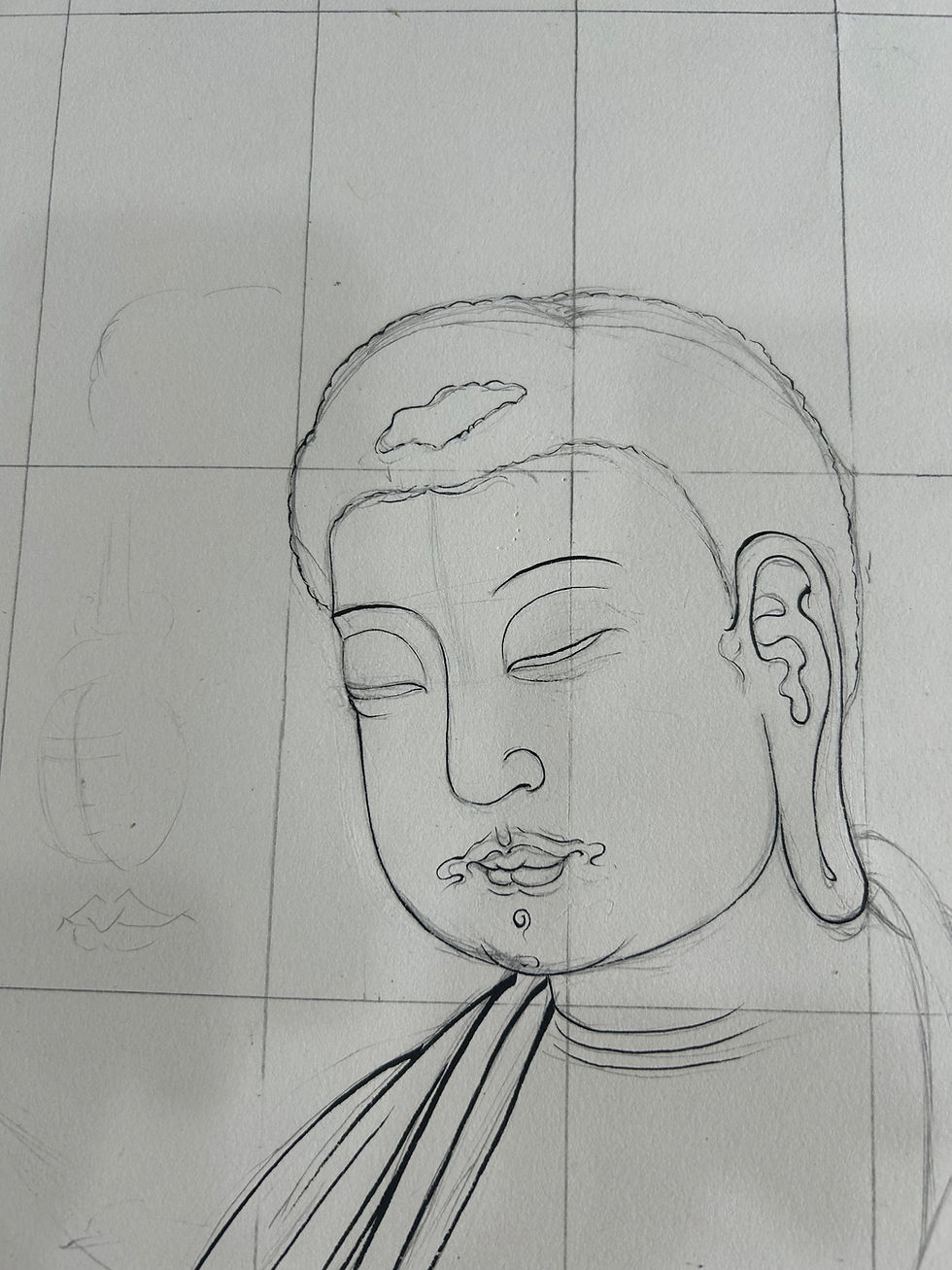
During the third week, I discussed the specific steps and visual references for Buddhist statue restoration with my mentor. Much of our discussion focused on comparing images and identifying the features of Song-dynasty Buddhist statues, particularly their drapery, colors, forms, and facial features. The way a statue’s face is modeled reflects the artistic style of its period. Ming-dynasty Buddhist figures often have smaller, more elaborate oval faces and delicate facial features. Song-dynasty figures, in contrast, tend to feel more human and natural. Their forms are more open and realistic, and their muscles and anatomical structures are usually represented more convincingly. Recognizing these differences also depends heavily on experience accumulated over time.

From my perspective, color is one of the clearest differences. Ming-dynasty statues sometimes use a vivid, bright blue, while Song-dynasty colors often appear more restrained and elegant. However, when the colors of two works are similar, we can only distinguish them through their overall “feeling.” Southern Song works, for example, often carry a refined, relaxed, and scholarly quality. This atmosphere is closely connected to the historical and cultural background of the period. Even when two works have similar compositions, they may express entirely different spirits. Every artist has a unique way of thinking, controlling the body, and responding through the nervous system. Differences in physical movement and muscle control also shape the rhythm and energy of the brushwork. Therefore, an artist’s individual character can ultimately be felt through the work.